
Load and Behold
One missed strap. One abrupt brake. One curve taken too sharply. That’s all it takes for a balanced trailer to become a hazard on the highway. When a load shifts, the risk doesn’t just apply to the cargo. It affects steering, braking, and trailer control. It can strain axles, damage goods, or cause a full rollover in worst-case scenarios. And on high-speed corridors, the margin for error is nearly zero. Our I-80 load shift correction service exists for moments exactly like this: when weight shifts threaten safety, and fast, skilled response is the only way to prevent further damage. Understanding how load shifts happen and what it takes to correct them is essential knowledge for anyone hauling freight.
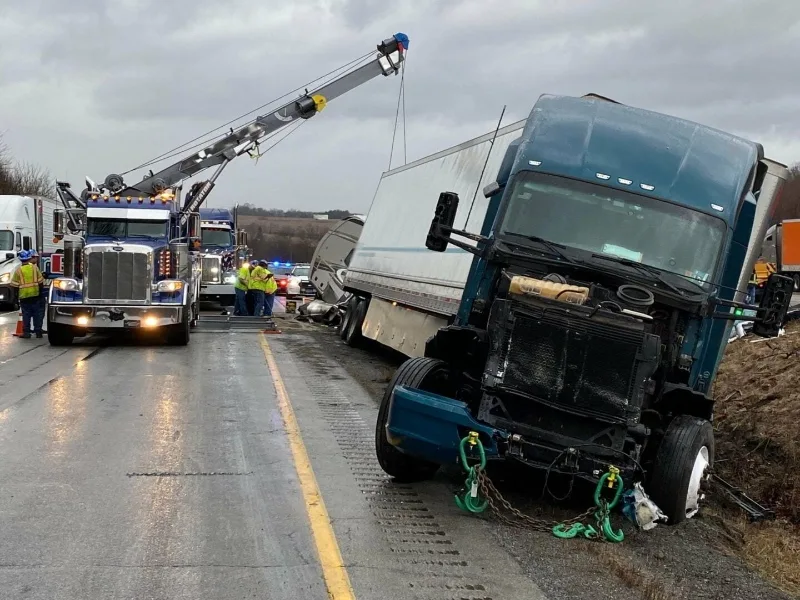
How Loads Lose Balance
Shifts rarely come from one catastrophic mistake. Instead, they often start with a small oversight that snowballs under stress. The most common contributors include:
- Worn-out or overloaded straps
- Stacked pallets that collapse mid-haul
- Cargo that isn’t properly blocked or braced
- Uneven trailer weight distribution
On the road, every mile introduces new variables: sharp curves, hard stops, swaying wind, rough pavement. If the load isn’t secured to absorb those changes, it starts to move. Bit by bit, weight creeps out of balance until the whole trailer feels off.
What Correction Really Involves
Correcting a load shift is more than just tightening a strap. It’s a strategic process that depends on cargo type, trailer layout, and overall weight distribution. I-80 load shift correction often involves coordination between drivers, tow truck operators, and sometimes law enforcement.
There’s no one-size-fits-all solution, but most corrections involve one or more of the following:
- Partial or full offloading to relieve stress on axles or tires
- Redistributing freight using pallet jacks, forklifts, or cranes
- Replacing broken securements and adding secondary tie-downs
- Rechecking all bracing and dunnage to prevent re-shifting
If conditions are unsafe, I-80 load shift correction may also require traffic redirection or lane closures. In every case, the goal is to restore roadworthiness without further risk.
Prevention Starts at the Dock
The best I-80 load shift correction is the one that never becomes necessary. Preventing shifts starts before the wheels turn. Drivers, loaders, and dispatchers all play a role in keeping freight in place.
Here are five fundamentals that reduce the risk of load shifts:
- Distribute weight evenly, front to back and side to side
- Use rated and inspected straps, chains, or load bars
- Brace and block loads according to cargo type
- Recheck securements at every fuel stop or driver change
- Train all handlers on proper securement techniques
Even with best practices, shifting can still happen. That’s why knowing how I-80 load shift correction works helps drivers respond more calmly and quickly.
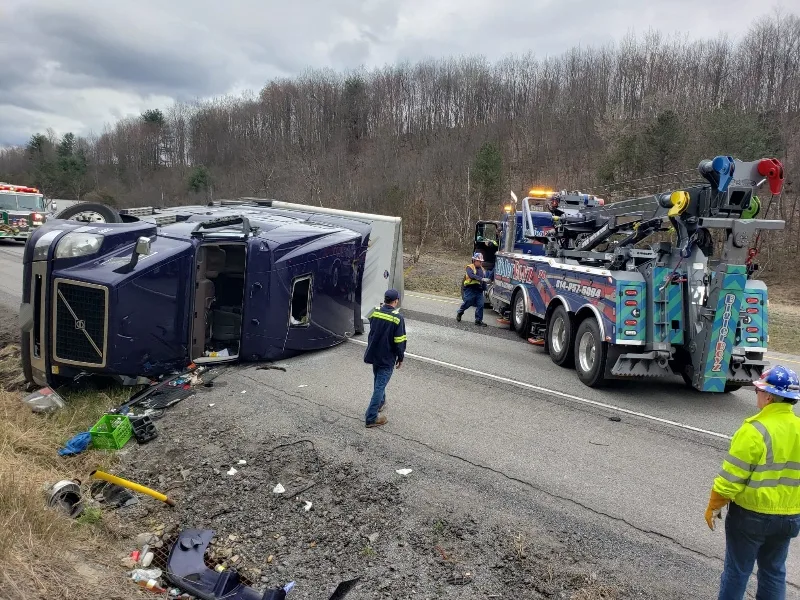
When Balance Is Everything Call Bigler Boyz for Your I-80 Load Shift Correction
Controlling a shifting load is as much about method as it is about muscle. And both come from experience. At Bigler Boyz Towing, we can handle every kind of I-80 load shift correction imaginable, from steel coils under stress to top-heavy freight that couldn’t hold its line. We know the risks, the pressure, and the precision it takes to get it right the first time. In freight hauling, stability isn’t optional.