
A Winter Recovery Deep in the Woods
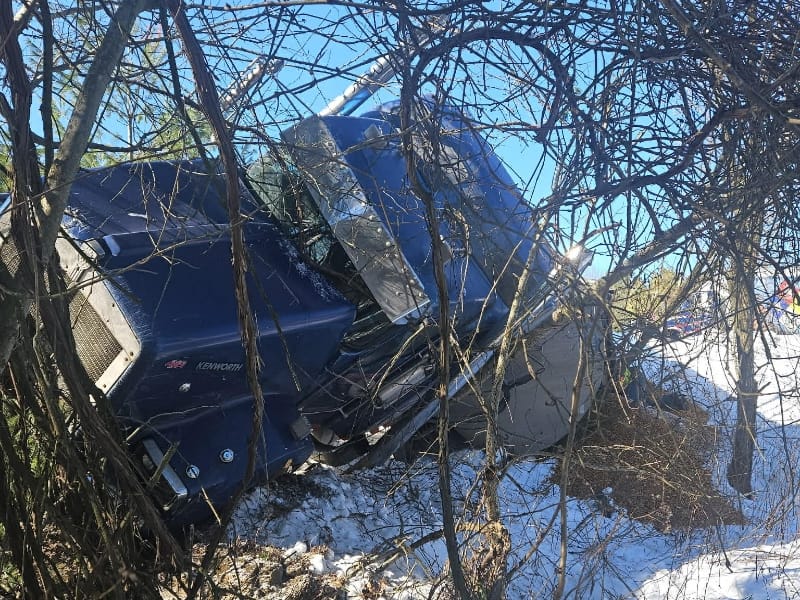
A clear winter sky presided over the hills as our towing team made our way toward a narrow mountain road outside Mahaffey. Snow had drifted across the pavement, the shoulders had disappeared under ice, and every curve carried a layer of packed slush. Before long, we arrived at a Mahaffey tractor trailer rollover involving a tractor and loaded dry tanker trailer carrying animal feed.
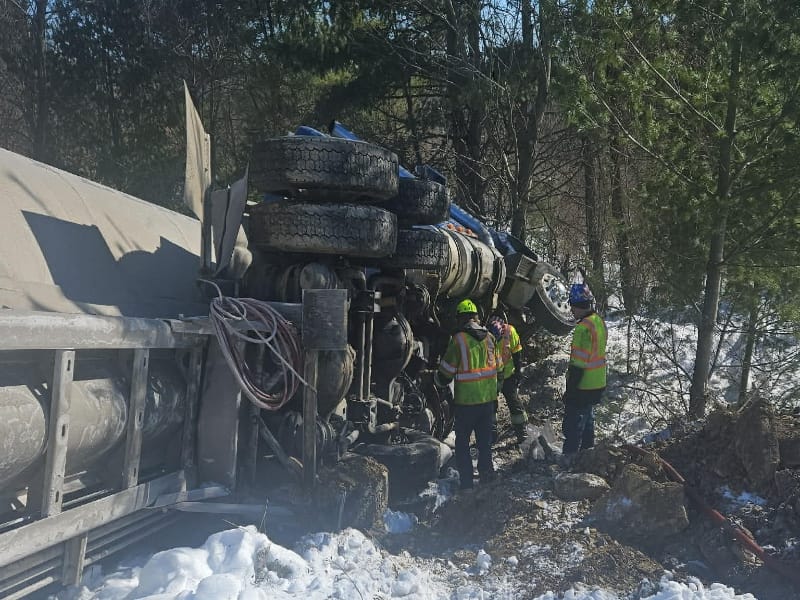
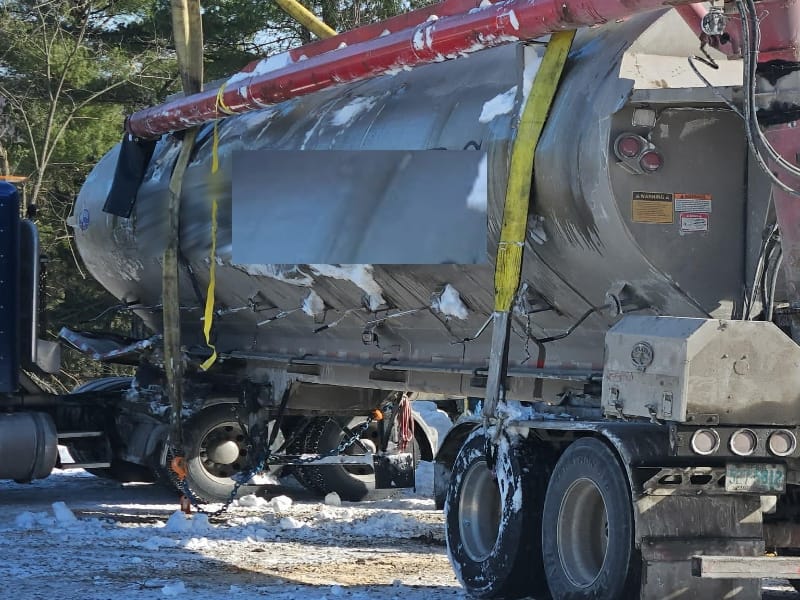
The combination unit had slid off the rural roadway, broken through the edge of the shoulder, and rolled down an embankment into the woods. The trailer rested on its side between trees while the tractor sat twisted lower on the slope. Fuel leaked from the tractor, snow covered the work area, and the narrow roadway gave us very little room to stage equipment. We secured the scene first so we could deal with the hazards before starting the recovery.
Stopping the Fuel Leak Before the Lift
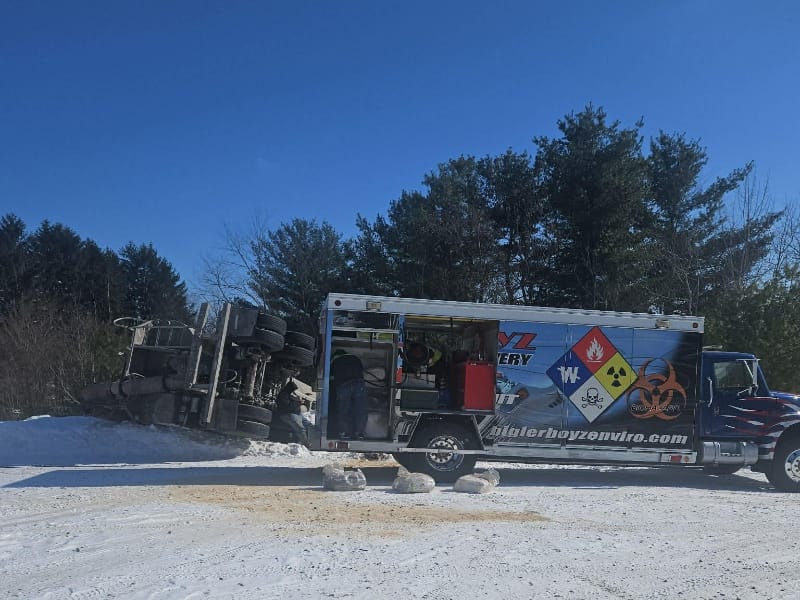
We positioned our emergency response truck near the tractor and got to work on the leaking fuel tanks. We used an environmental transfer pump to move the remaining fuel into a secure container and stop the spill from spreading farther down the hillside. Absorbent pads surrounded the affected area, and we covered every spot where fuel had reached the snow.
The steep terrain and frozen ground made the cleanup slower than usual. We worked carefully around the tractor because the ice under our boots shifted with every step. By the time we finished the containment work, the scene had become stable enough for the heavy recovery phase of the Mahaffey tractor trailer rollover.
Clearing a Path Through Snow and Ice
The snow around the trailer reached deep enough to hide rocks, branches, and uneven ground. We brought in a truck equipped with a plow and cleared the roadway and shoulder so we could create enough room for our rotators. Hand shovels and digging tools helped us open access points around the trailer and undercarriage.
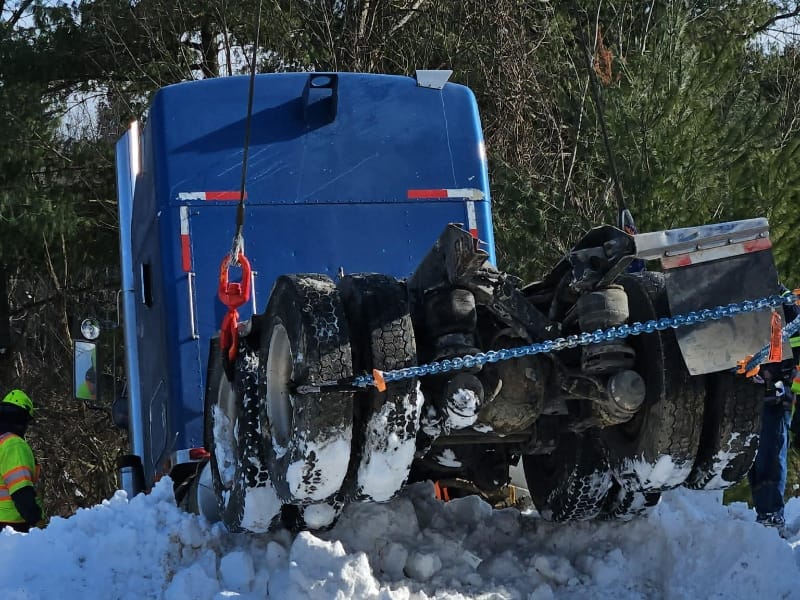
Before we could rig the trailer, we had to prepare the tractor for towing. We removed the driveshaft to protect the drivetrain once the unit came back onto the road. Every inch of working space mattered, so we disconnected the trailer from the tractor and planned to recover each unit separately.
We used several pieces of equipment during this stage:
- Emergency response truck with environmental pump
- Snowplow truck for access and staging
- Heavy-duty 12-inch recovery straps
- Two heavy rotators
- One heavy wrecker
- Repower tractor for moving the trailer
Rolling the Trailer Upright
Once the scene was ready, we wrapped heavy 12-inch recovery straps around the tanker trailer and moved both rotators into position. We fully extended the outriggers and leveled the units so they could handle the load on the icy hillside. The booms swung over the trailer, and the main winch lines connected to the rigging.
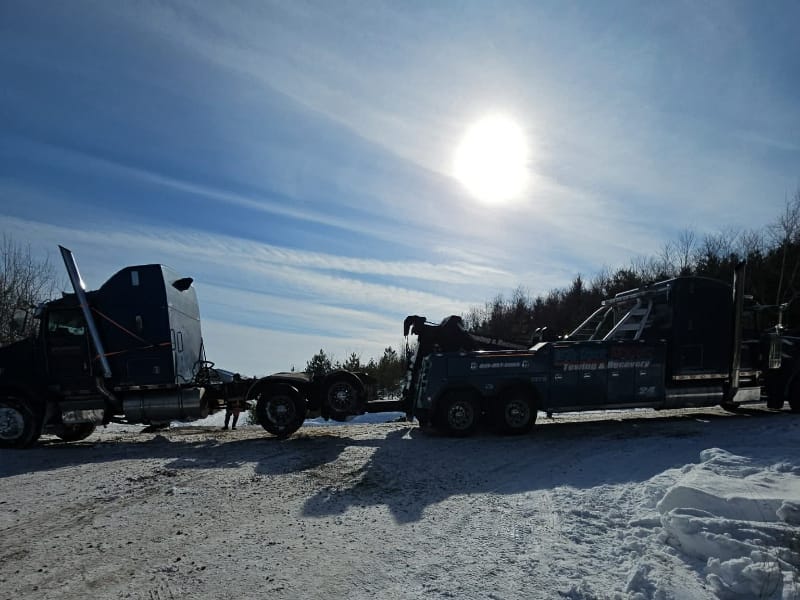
A heavy wrecker stayed on the roadway and applied steady pulling force while both rotators lifted together. During the Mahaffey tractor trailer rollover, the trailer had to clear trees and climb the slope at the same time. We rolled it in the air in one controlled motion and guided it back onto the road surface.
After we set the trailer upright, one rotator held the front end high enough for us to back a repower tractor into place. Once the connection was complete, we moved the trailer away from the scene so we could continue working on the tractor. Following completion of the recovery, both the tractor and trailer were towed from the accident scene to our secured facility and placed into storage. All personnel and equipment were then demobilized, returned to our facility, inspected, and placed back into service and available status.
That step marked another major turning point in the Mahaffey tractor trailer rollover and opened the area for the final stage of the job.
How Bigler Boyz Towing Handled this Mahaffey Tractor Trailer Rollover with Expertise
At Bigler Boyz Towing, we spend a great deal of time preparing for recoveries that happen in rough weather and remote locations. A Mahaffey tractor trailer rollover can involve steep terrain, leaking fluids, blocked roads, and difficult access, often all at once. We bring the equipment, planning, and crew coordination needed to work through those problems one step at a time.
Our team at Bigler Boyz Towing & Recovery handles heavy-duty towing, environmental response, winching, rotator work, and tractor trailer recovery across the region. During a Mahaffey tractor trailer rollover, we focus on protecting the scene, keeping the recovery controlled, and getting every vehicle back where it belongs.
FAQ
What should happen first after a tractor trailer rolls over?
The first step is securing the scene. Crews need to stop traffic, check for injuries, identify fuel leaks, and stabilize the vehicle before recovery begins.
Why do recovery crews remove fuel from a damaged truck?
Fuel transfer helps stop leaks and lowers the fire risk. It also prevents more fuel from spilling while the truck is being lifted or moved.
How do tow operators recover a trailer from a steep embankment?
Heavy rotators and winches pull the trailer while recovery straps hold it in place. Crews often recover the tractor and trailer separately to keep the lift controlled.
Why is snow and ice a problem during heavy recovery work?
Snow and ice reduce traction for trucks, workers, and equipment. Crews often need to clear the area with plows and hand tools before they can begin the recovery.
What is a rotator tow truck used for?
A rotator tow truck uses a rotating boom to lift and move heavy vehicles. It helps crews recover overturned trucks in tight spaces, steep terrain, and off-road areas.
Why do crews remove the driveshaft before towing a damaged tractor?
Removing the driveshaft protects the transmission and drivetrain from damage. This step prepares the truck for towing after the recovery is complete.