
Tire Trouble at Highway Speed
Many truck tire blowout calls start like this: the driver said he heard a pop, felt the steer tire shred, and managed to get the rig onto the shoulder before the rim started digging into asphalt. By the time our heavy tow truck team arrived, the fender was torn, the brake line was leaking, and the truck wasn’t going anywhere under its own power. That’s when a simple blowout becomes a US-322 semi towing job instead of a roadside tire swap.
Most drivers think a blown tire means a quick fix. Sometimes it does. But when the failure happens at speed, with a full load, or on a tight shoulder with no safe room to work, the call changes fast.
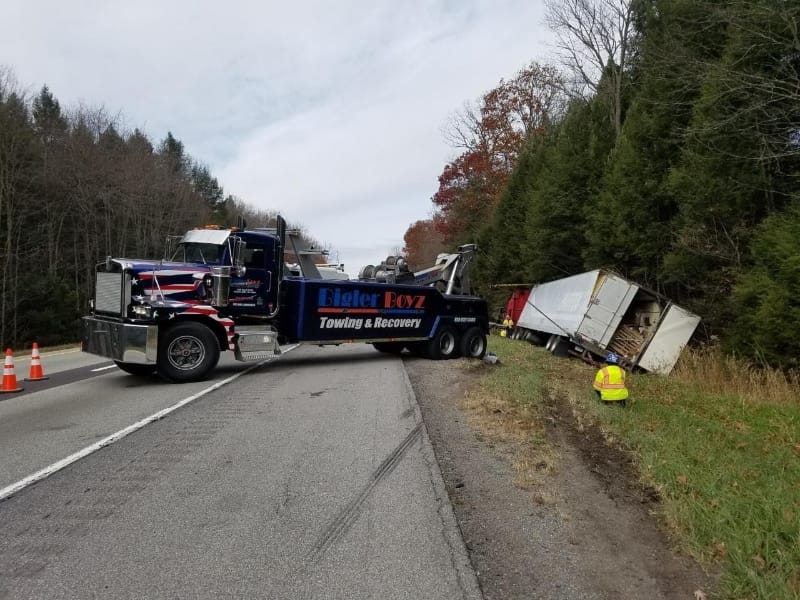
What Happens in the First Few Seconds
A steer tire blowout hits hard. The wheel jerks, the cab shakes, and the truck pulls toward the damaged side. On US-322 semi towing calls, we see calm drivers keep the rig straight, while overcorrecting or hard braking can send the trailer out of line.
The right move is to hold the wheel firm, ease off the throttle, and let the truck slow down. If the shoulder is narrow or uneven, steering control matters even more.
Why Tires Fail on Loaded Rigs
Heat is usually part of it. Low air pressure makes a tire flex, build heat, and break apart under load. Heavy freight, long grades, hot pavement, debris, old casings, or previous repairs can all weaken the tire before the driver notices anything wrong.
Speed is also a factor. One small weak spot at highway speed can turn into shredded rubber in seconds.
What Drivers Need to Do Right After the Blowout
Get out of traffic. That’s the first goal. Use the flashers, check the mirrors, and move toward the shoulder only when it’s clear. Once stopped, set triangles if it’s safe to get out. Stay away from live lanes and don’t walk around the truck if traffic is close.
For US-322 semi towing, we need specific details to send the right response. Mile marker or nearest cross street, direction of travel, which tire failed, trailer type, load weight, and whether the truck can still build air pressure all matter. A drive tire blowout with no other damage might only need a service truck. A steer tire failure with bent suspension, torn fender, or leaking brake lines usually means a heavy tow.
Mistakes That Make the Damage Worse
Actions too avoid:
- Don’t keep driving on loose rubber
- Don’t guess whether the brakes are damaged
- Don’t try to change the tire in live traffic
- Don’t ignore bent rims or damaged axle components
On US-322 semi towing calls, the most expensive part of the recovery often comes from what the driver did after the tire blew, not the blowout itself.
When a Tire Change Turns Into a Heavy Tow
A clean blowout with no other damage is a service call. A blowout that tears into the fender, locks up the brakes, bends the suspension, or leaves the truck unable to move is a towing call. We look at the tire position, the shoulder width, the load, the traffic, and the next safe spot before we decide how to move the rig.
Sometimes the trailer stays put and the tractor goes to the shop. Sometimes the whole combination needs to move together. On US-322 semi towing jobs, that depends on what the fleet needs, what the load requires, and how bad the damage is. Rushing the decision can leave a loaded trailer sitting in a bad spot or create a second tow later.
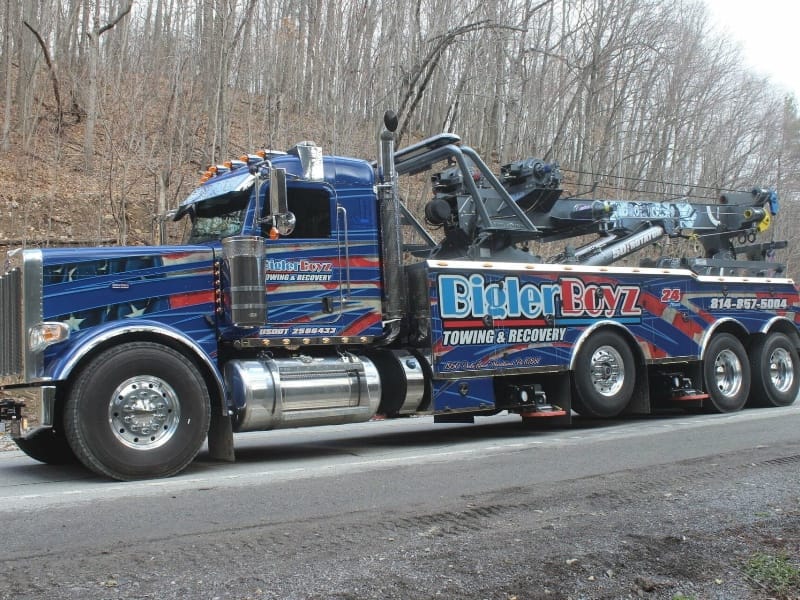
Bigler Boyz Towing: Professional US-322 Semi Towing
Bigler Boyz Towing runs 24 hours a day, 7 days a week, because tire failures don’t wait for business hours. Our dispatchers are in-house, our operators are certified, and our fleet has the equipment to handle everything from a roadside tire swap to a full heavy recovery. We started with a focus on professionalism and safety, and that still drives how we respond to US-322 semi towing calls.
When a blowout involves more than just a tire, we’ve got truckers covered. Our team has decades of experience, and they go through continuing education every year to stay current on techniques and safety standards. We also have spill remediation and Hazmat teams through our connection with Bigler Boyz Enviro, which means we can handle incidents that other companies can’t touch. A blown tire that leads to a fuel spill, a cargo shift, or a disabled rig on a busy highway doesn’t have to turn into a multi-day mess. We show up, we assess, and we move the truck without making the damage worse.
FAQs
What should I do if a steer tire blows on a semi?
Hold the wheel steady and avoid sharp movements. Ease off the throttle, let the truck slow down, and move toward the shoulder only when you have room.
Can I keep driving after a semi tire blowout?
It is usually a bad idea. Loose rubber can tear into brake lines, wiring, fenders, mudflaps, and suspension parts. Stop as soon as it is safe.
Why do semi tires fail even after a pretrip inspection?
Some problems are hard to see from the outside. Low air pressure, casing damage, road debris, heat, and older repairs can all lead to failure under load.
When does a blowout need a tow instead of tire service?
A tow may be needed if the truck has brake damage, rim damage, a bent axle, leaking air lines, or broken suspension. Road position also matters.
What details should I give dispatch after a blowout?
Share the road marker, direction of travel, failed tire position, trailer type, load status, and visible damage. Photos can help dispatch send the right truck.
Can a tire blowout cause a fire?
Yes, it can. Shredded rubber, dragging parts, brake heat, or damaged lines can create fire risks. That is one reason drivers should not keep limping the truck down the road.