
A Box Truck Down at Thompsons Curve
On August 10, 2026, Pennsylvania State Police called us to Route 322 near Thompsons Curve in Port Matilda, PA, where a commercial box truck had rolled onto its side and blocked the westbound lane. Diesel fuel had spilled across the roadway, and traffic could not move through the scene. That made this a Port Matilda heavy towing call with recovery, spill control, debris cleanup, and transport all tied together.
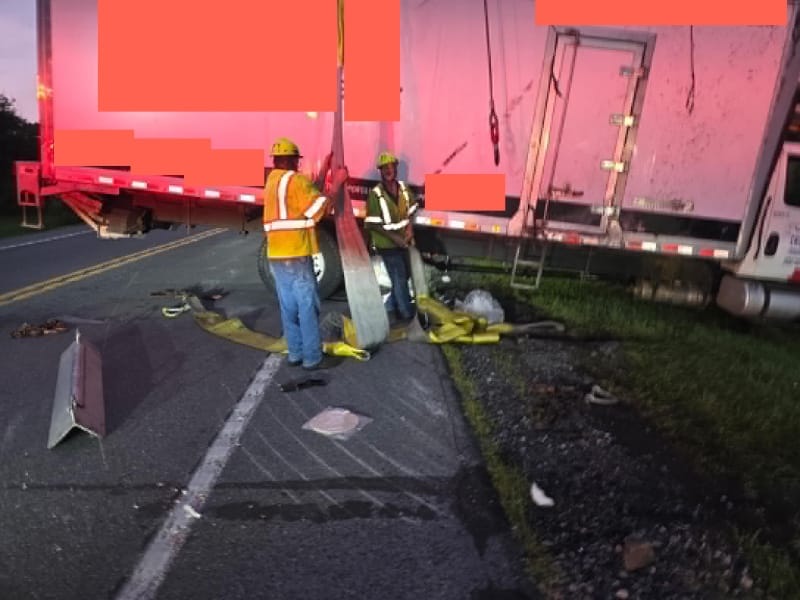
When we arrived, the vehicle was still on its side across the travel lane. A rollover like that can be… complicated. We needed to upright the truck, keep the fuel from spreading, collect broken parts, and get the damaged unit moved to our storage facility in Woodland.
Why We Sent More Than One Truck
Our response included a rotator, a heavy wrecker, an emergency response truck, a supervisor truck, spill tackle, and trash bags. The rotator gave us the reach and lifting control needed to bring the box truck back onto its wheels. The heavy wrecker came in for the tow once the truck was upright and secured.
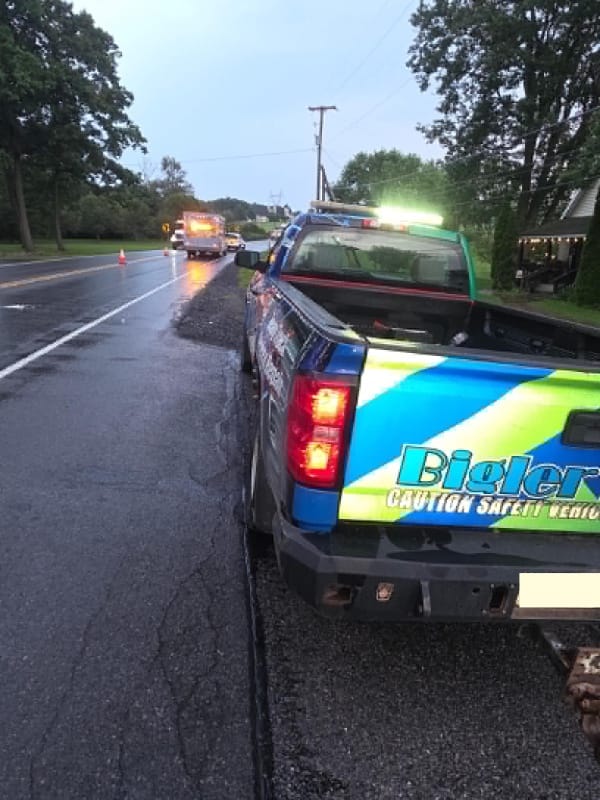
The emergency response truck carried the rigging, tools, and cleanup supplies we needed on scene. The supervisor truck helped keep the job organized from recovery through final cleanup. On a blocked highway lane, crews need clear roles because one slow step can hold traffic longer than it should.
Setting the Rotator for the Uprighting
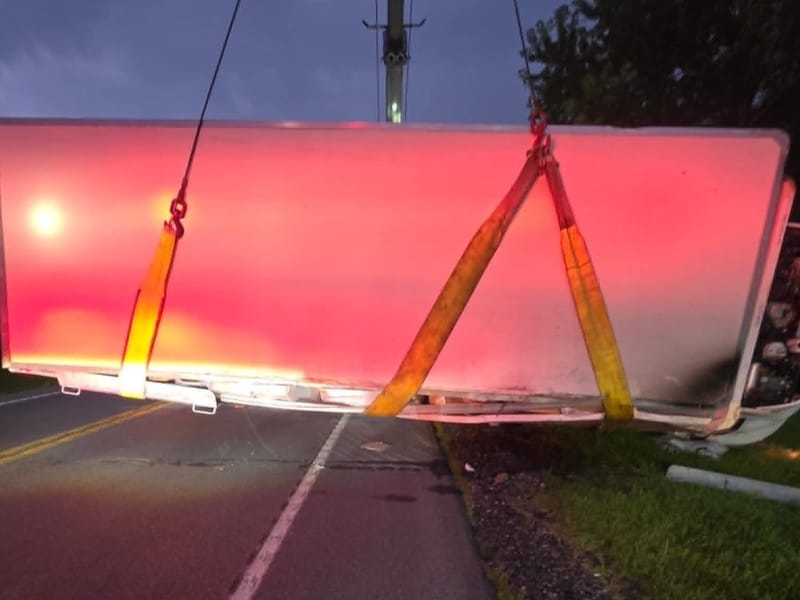
We positioned the rotator close enough to extend the boom over the overturned box truck. The crew installed straps and chains at solid frame and axle points, then checked the angle before adding full tension. A box truck can drag, twist, or shift hard once it starts coming off its side.
The rotator’s upper winch lines were lowered and connected to the rigging. We applied steady upward pressure until the truck began rotating back toward its wheels. A rushed pull on a fuel-soaked roadway can create more cleanup, so we kept the lift controlled from the first bit of line tension.
Cleaning Up Fuel and Road Debris
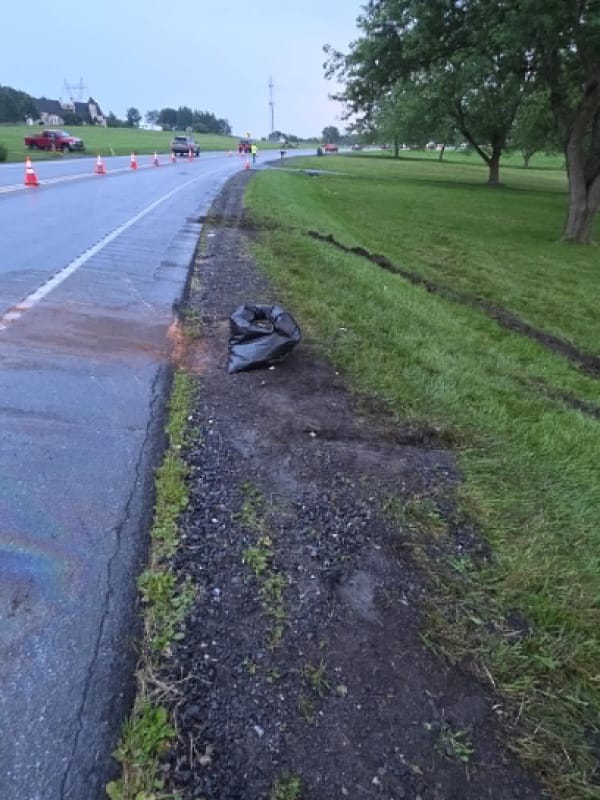
Once the truck was stable enough for cleanup work to continue, we placed spill tackle along the edges of the diesel spill. Absorbent material went directly onto the fuel, and our crew worked it into the pavement to lift the residue. That part of Port Matilda heavy towing matters because the lane cannot reopen with fuel still spread across the road surface.
We also collected damaged vehicle parts and debris by hand. The cleanup steps were simple, but they had to happen in order:
- Contain the diesel spill
- Apply absorbent material
- Work the absorbent into the pavement
- Bag saturated material
- Pick up broken parts and scattered debris
- Remove all filled trash bags from the scene
From Upright to Ready for Transport
After the box truck was back on its wheels, we inspected the rigging and repositioned for the tow. The heavy wrecker moved into place and connected to the recovered truck. For this Port Matilda heavy towing job, the tow-out was the final step after the lift, spill response, and debris collection were under control.
We secured the box truck to the heavy wrecker and transported it from Route 322 near Thompsons Curve to our storage facility in Woodland, PA. A rollover recovery is rarely one single move. Port Matilda heavy towing after a crash like this means working through the scene piece by piece until the roadway is clear again.
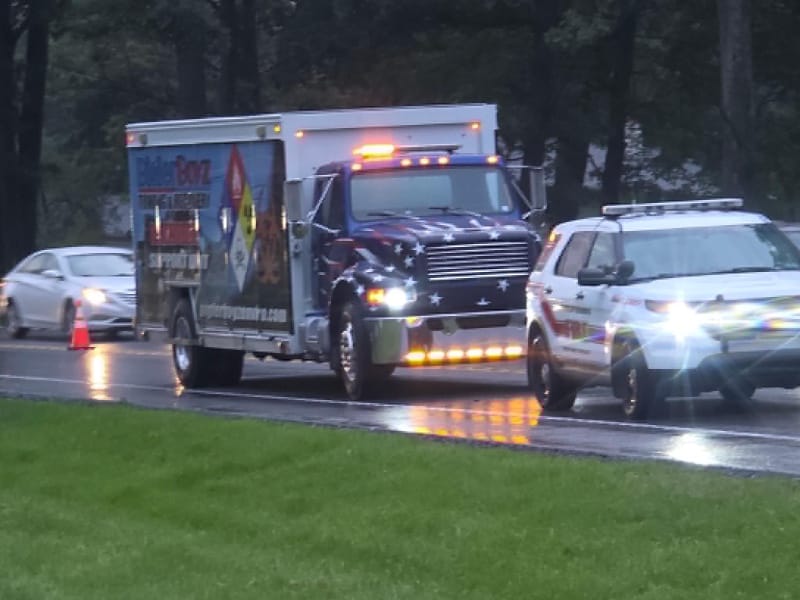
Bigler Boyz Towing Handles Port Matilda Heavy Towing After Rollover Calls
Bigler Boyz Towing responds to heavy towing, recovery, road service, and accident cleanup calls across central Pennsylvania. For this Port Matilda heavy towing response, our team brought the rotator, heavy wrecker, emergency response truck, supervisor truck, spill supplies, and crew needed to handle the whole scene. The work called for lifting control, spill containment, debris removal, and transport in one coordinated response.
A rolled box truck on Route 322 creates more than a tow bill. It blocks traffic, spills fuel, scatters debris, and leaves police waiting on a clear lane. Our Port Matilda heavy towing work that day came down to a practical order: stop the spread, upright the truck, clean the pavement, tow the unit, and leave Thompsons Curve ready for traffic again.
FAQs
Why does a rolled box truck usually need a rotator?
A rotator can lift and rotate a truck from its side with more control than a straight pull. That helps protect the truck, the roadway, and the crew working nearby.
Is spilled diesel dangerous after a crash?
Yes. Diesel can make pavement slick and can spread into drains, soil, or nearby runoff areas. Crews usually contain it quickly and use absorbent material to pull it off the surface.
What should a driver do after a box truck rolls over?
Check for injuries first, then get away from traffic if it is safe to move. Call 911 and avoid walking through spilled fuel or debris.
Can a damaged box truck be towed after it is uprighted?
Often, yes. The recovery crew checks the frame, wheels, axles, and towing points before connecting it to a wrecker.
Why does debris cleanup take time after a rollover?
Broken parts, spilled cargo, glass, absorbent material, and fluids may all need to be removed. The lane has to be clear enough for traffic to pass without hitting debris.
What details help dispatch after a commercial truck crash?
Share the exact road location, truck size, cargo type, fuel leak concerns, and lane blockage. Photos help too, as long as they can be taken from a safe spot.