
A Derate Does Not Happen Without Warning
A “derate” is the engine’s own computer stepping in and cutting power, not a random mechanical failure. Usually to protect an emissions system that has been ignored one warning too many times. By the time a truck actually derates on the road, there were signs pointing to it well before that, and more than a few of the calls we run for DuBois semi recovery trace back to exactly that pattern.
Answering a few basic questions ahead of time makes it a lot easier to catch the problem before it costs you speed on the highway.
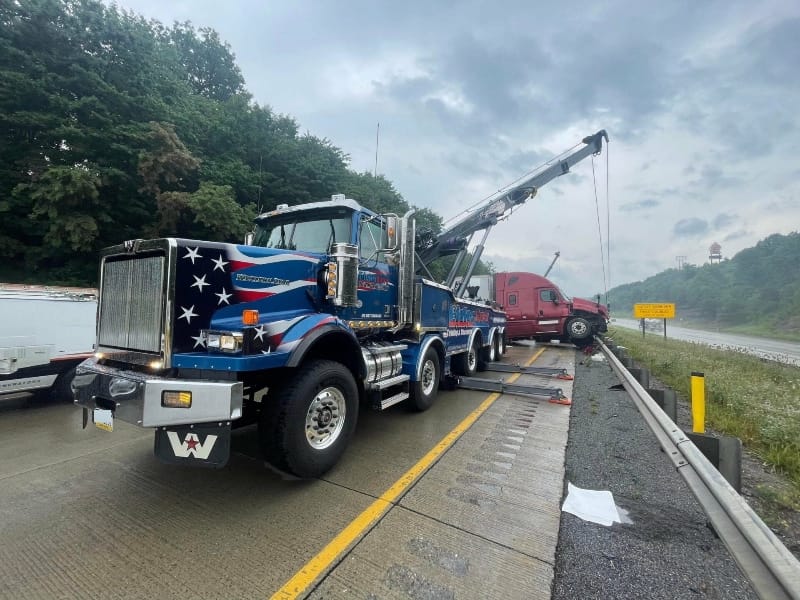
Quick Answers Before You’re Stuck on the Shoulder
What Is a Derate, Exactly?
A derate is a forced reduction in engine power and top speed, triggered automatically once the truck’s computer decides the emissions system needs attention it has not been getting. Depending on the severity, that can mean a capped RPM, a lower top speed, or both. It is meant to be inconvenient enough that a driver addresses the problem instead of ignoring it. It does not damage the engine on its own, but it will bring a route to a crawl.
Why Does a DPF Cause This?
The diesel particulate filter traps soot from the exhaust, and it needs periodic regeneration cycles to burn that soot off and keep working. When regeneration cannot keep up, usually because of short trips, heavy idling, or a dashboard warning that got ignored, soot keeps building until the truck’s computer forces a derate to prevent further damage. It is the system’s last resort, not its first move.
Can You Reverse a Derate Yourself?
Sometimes, if it is caught early enough, a parked regeneration cycle can clear the soot and lift the derate on its own. Once the buildup has gone past that point, or a warning light was ignored for too long, the truck usually needs a technician to diagnose and reset the system. Waiting it out on the shoulder rarely fixes anything by itself.
Catching It Before the Power Drops
Most trucks give a clear sequence of warnings before an actual derate, and ignoring the whole sequence is one of the more common reasons we run a semi recovery call near DuBois:
- An amber dashboard light appears first, often paired with a note to service the emissions system soon
- Regeneration cycles start happening more often or take longer than usual
- Fuel economy drops and the idle feels rougher than normal
- A firmer, harder-to-miss warning appears as the system runs out of options before forcing a derate
The moment any of those shows up, pulling over safely and addressing it is a better plan than pushing through and hoping it clears on its own. That habit is what keeps a manageable warning light from turning into a call for DuBois semi recovery on the side of the road.
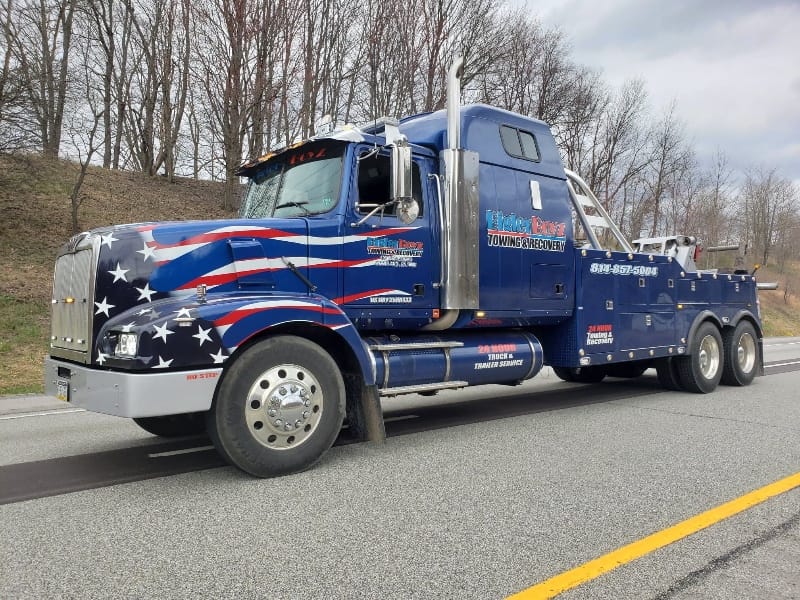
Bigler Boyz Towing: DuBois Semi Recovery Backed by Real Training
Bigler Boyz Towing built its reputation on customer satisfaction and safety, with tow truck operators who are professionally trained, certified, and required to complete continuing education courses every year, ready for any DuBois semi recovery call that comes in. That standard is what shows up on every call for semi recovery in DuBois, from a simple tow to a complicated recovery most other companies would turn down.
As a subsidiary of Bigler Boyz Enviro, we also bring the county’s best spill remediation and Hazmat capability to incidents that other tow truck companies cannot handle, backed by a fleet we are constantly updating with the latest equipment. Someone is always answering the phone, day or night, ready to get a truck out to you for DuBois semi recovery.
FAQs
Can a truck still be driven after it enters derate?
It may still move, but engine power, RPM, or road speed can be restricted. How severe the restriction becomes depends on the fault and the truck’s system.
Will turning the truck off reset a DPF derate?
Usually, restarting the engine does not solve the underlying emissions problem. If soot buildup or another fault triggered the restriction, that issue still needs attention.
How long does a parked regeneration take?
The time varies by engine, soot level, and system condition. Drivers should allow the full cycle to finish and follow the manufacturer’s instructions.
Why does excessive idling cause DPF trouble?
Idling may not produce enough exhaust heat for effective regeneration. Soot can then accumulate faster than the filter can clear it.
Can something other than a clogged filter trigger a derate?
Yes. Sensors and other parts of the emissions system can develop faults that affect engine performance. A proper diagnosis identifies what actually triggered the restriction.
What should I do if my truck loses power while I am driving?
Move to an appropriate stopping location if the truck can still be controlled and driven there. Check the dashboard warnings and arrange service rather than continuing to push a truck with worsening restrictions.