
A Route 970 Recovery With No Straight Pull
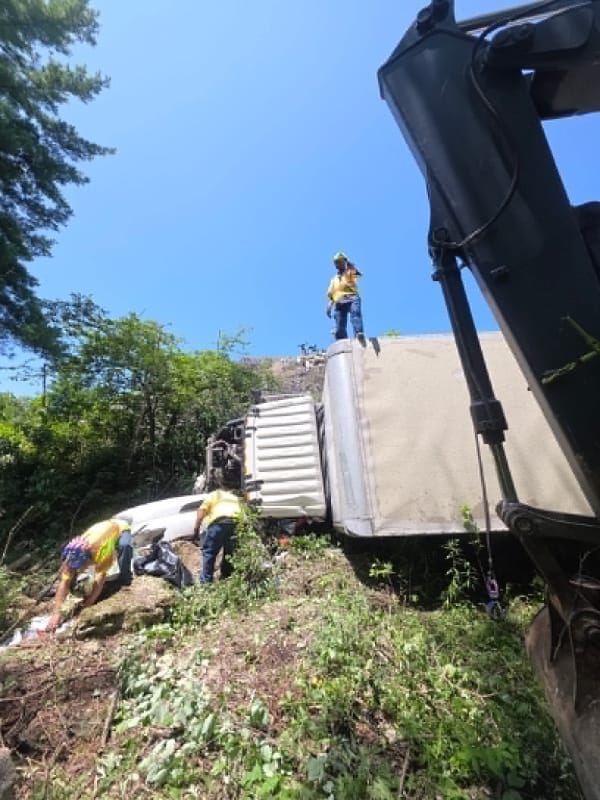
On July 23, 2026, Pennsylvania State Police called us to Route 970 in Woodland, PA, in Bradford Township near Samuel J. Lansberry Trucking. A commercial box truck had left the roadway, gone down a steep backfilled cliff area, and landed on its side below the road. This was a Woodland heavy towing job with a lot more going on than a normal roadside hookup.
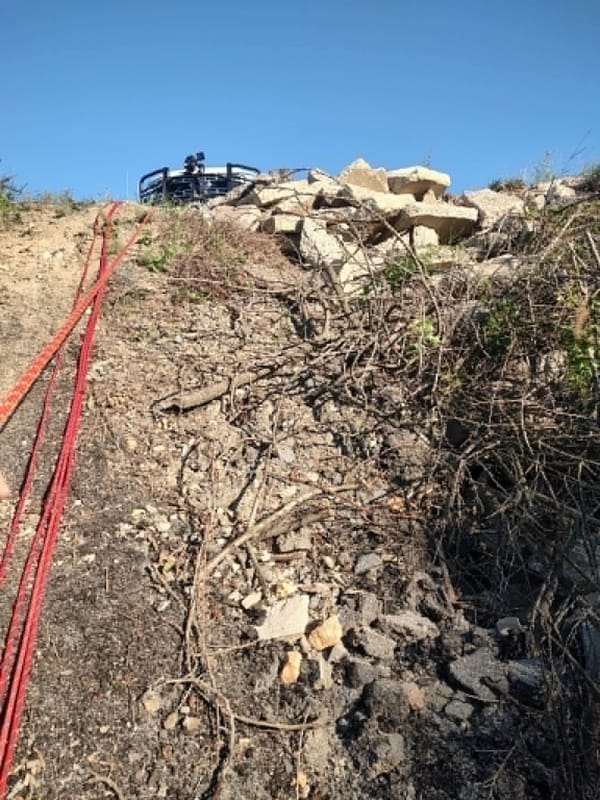
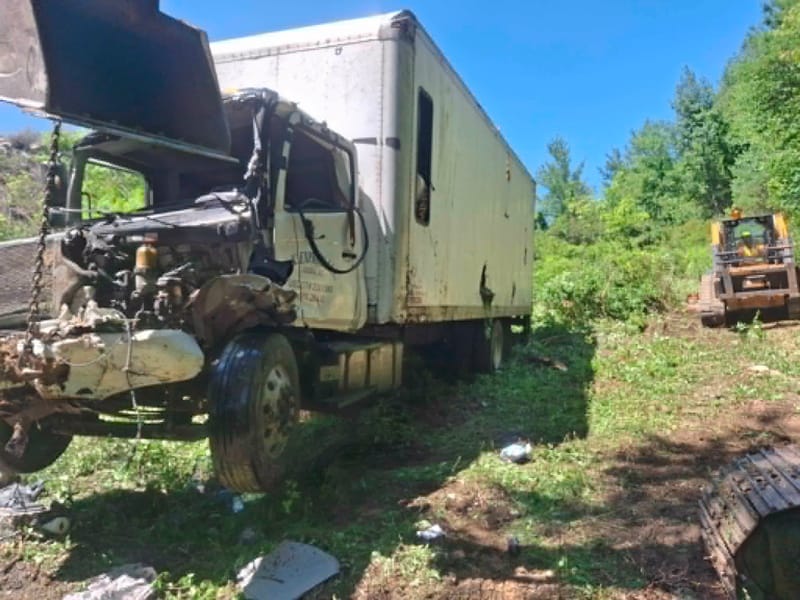
When we arrived, the vehicle was resting in thick overgrowth at the bottom of the slope. The cab had separated from the box body, and debris was scattered through the brush. Large concrete boulders and broken slabs sat in and around the truck, which created a real risk of damaged fuel, oil, and fluid components if we dragged the unit the wrong way.

The Access Road Had to Be Rebuilt First
A direct uphill extraction from the road was not workable. The slope was too steep, the concrete backfill was too rough, and the truck was too damaged to pull straight up without making the scene worse. We found an old access road at the base of the cliff, but it had grown shut with trees, brush, and heavy vegetation.
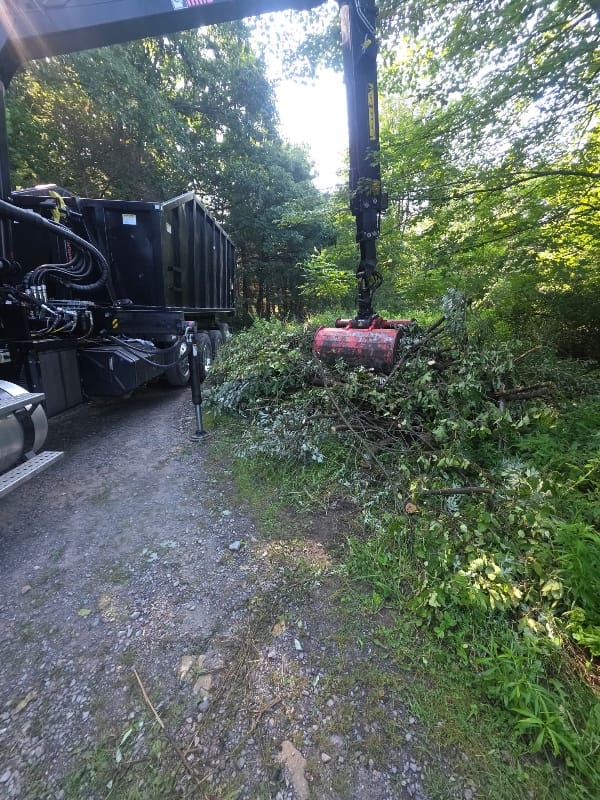
Before any recovery could happen, our crew had to open that road back up. Chainsaw operators cut trees and brush ahead of the equipment. The rotator used its 360-degree boom and grapple to grab cut trees and load them into the dump truck, while the Case TV620B track loader pushed brush to the sides.
Heavy Equipment Cleared the Path
We sent a rotator with a grapple, a heavy-duty wrecker, a tandem axle heavy-duty rollback, a Case TV620B track loader, a John Deere 135 excavator, a tractor with lowboy, an emergency response truck, a dump truck, a supervisor truck, and a response truck with an LED message board. That may sound like a lot, but this scene needed equipment for lifting, clearing, traffic awareness, transport, and cleanup.
The John Deere excavator moved concrete boulders and broken slabs away from the truck and out of the extraction route. That part mattered because jagged concrete can tear into tanks, lines, and underbody parts during a recovery. We would rather spend time clearing the path than fight a fluid spill halfway through the pull.
Uprighting the Box Truck
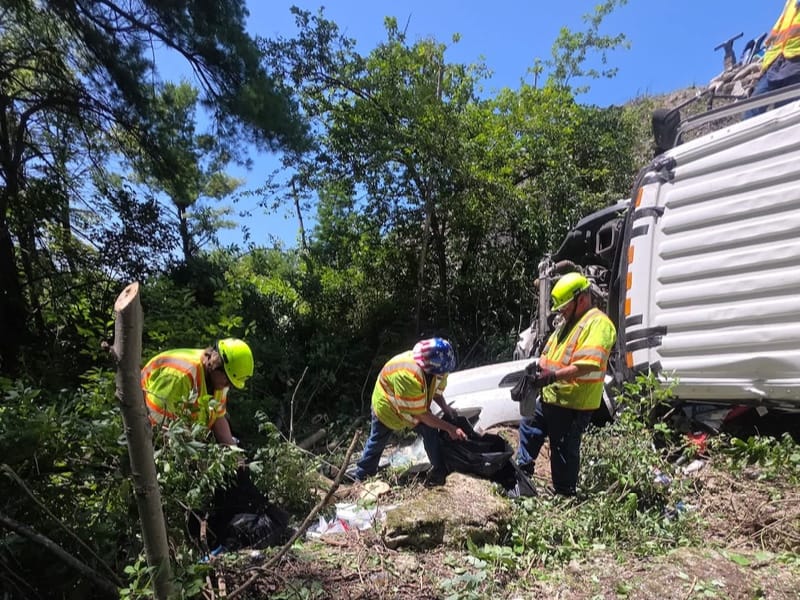
Once the access route and work area were cleared, the rotator was positioned so the boom could reach over the overturned truck. The crew set rigging to solid points and applied upward tension through the winch line. The truck was rotated from its side back onto its wheels in the cleared area below the road.
A rollover recovery in brush and broken concrete takes a slow hand. The ground was uneven, the truck was damaged, and the box body had already taken a hard hit. Woodland heavy towing in a spot like this means watching what the truck does with every bit of movement, not forcing it to follow a perfect line that the terrain will not allow.
Moving It Through the Reopened Access Road
After the box truck was upright, chains were attached to the front frame and axle points and connected to the John Deere excavator. The Case TV620B track loader positioned at the rear with forks under the rear frame. The excavator lifted and pulled from the front while the track loader supported and guided the rear.
The sequence took steady coordination:
- Clear trees and brush from the old road
- Move concrete boulders and slabs from the recovery path
- Upright the box truck with the rotator
- Attach chains to the front frame and axle points
- Support the rear with the track loader
- Move the truck forward in short sections
- Bring it to a point the heavy wrecker could reach
This Woodland heavy towing job depended on the excavator and loader working together until the truck reached accessible ground.
Cleaning the Scene Before Transport
Vehicle parts and cargo debris had scattered through the brush after the crash. Our crew collected debris by hand and bagged it for removal. The rotator grapple loaded cut trees and brush into the dump truck so the access area could be cleared after the recovery.
Once the box truck reached a workable spot, the heavy-duty wrecker connected to it for transport. The response truck with the LED message board stayed active at the scene entrance during the job so drivers knew recovery crews and equipment were ahead. Woodland heavy towing on a rural road still needs traffic awareness, even when the main work is happening below the road grade.
Bigler Boyz Towing Handles Woodland Heavy Towing for Difficult Recoveries
Bigler Boyz Towing has served Woodland, DuBois, Kylertown, and nearby central Pennsylvania communities since 2009. Our Woodland heavy towing work includes rollovers, off-road recoveries, spill response, accident cleanup, and heavy transport support. As a subsidiary of Bigler Boyz Enviro, we also have spill remediation and Hazmat support for scenes where fluids, contamination, or roadway cleanup become part of the call.
Our operators train often, keep certifications current, and work with equipment built for difficult recovery scenes. On this Woodland heavy towing job, the answer was not one big pull. It was clearing an old road, moving concrete, uprighting the truck, carrying it out with heavy equipment, collecting debris, and hauling the damaged box truck back to storage.
FAQs
What happens when a truck goes over a steep embankment?
The crew first checks the slope, ground, damage, and access points. A straight pull may not be possible. Sometimes the recovery has to start by creating a route to reach the truck.
Why would crews clear an old access road before moving a wreck?
A cleared road can give heavy equipment and wreckers a safer path to the vehicle. It also keeps the recovery from dragging the truck through trees, rocks, or debris.
Can excavators and loaders be used during a towing recovery?
Yes. They can help move debris, support part of a damaged truck, or guide it through rough ground. They are useful when a wrecker cannot reach the vehicle directly.
Why are concrete chunks a problem near a crashed truck?
Broken concrete can cut fuel tanks, oil pans, air lines, and other fluid parts. Crews often move sharp debris before pulling the truck through the area.
What should I tell dispatch if a truck leaves the roadway?
Give the exact location, truck type, cargo details, visible damage, and whether the vehicle is upright or on its side. Mention slopes, trees, water, mud, or blocked access.
Who removes debris after an off-road crash?
The recovery crew often collects vehicle parts, cargo debris, brush, and cleanup material as part of the job. Some scenes may also need environmental cleanup if fluids leak.